Contents: Basics; RF Meter; Antenna Analyzers; Spectrum Analyzers; Coax Cutter; Power Checkers; Fire Extinguishers; MiniVNAPro; Auto Off; Amplifier Interfaces; FT-857 Meter; Mini-Manual; Rescue Tape; Two Wire Voltmeters; Video Display;
Anything anyone does to increase safety and/or reduce distraction is a good step in the right direction. And so is using the correct tool for the job at hand! This is especially important when matching antennas, when we need to know more than an SWR bridge will tell us. Just as important, are they typical tools of the trade, and they're covered here.
None of the following should be construed as endorsements, or paid advertising. They're only here as they are proven tools for doing the job correctly, the first time!
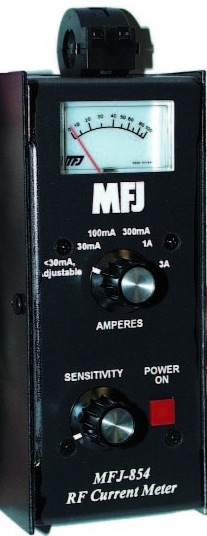 The MFJ-854 is an inexpensive device for measuring RF imposed on conductors. It is mentioned here because it is an ideal tool for checking the presence of common mode current flow on coaxial feed lines—a malady which effects every HF mobile. It uses a 9 volt battery with an automatic off timer to assure long battery life. It can measure RF current as low as 1 ma, and can handle up to 3 amps maximum.
While very easy to use, it has one drawback—the ferrite core attached to the top of the 854, is VERY difficult to open. Thankfully, MFJ provides a small tool to aid in opening the core, so the conductor can be inserted. Even then, it takes due diligence, and strong fingers! The hole through the ferrite core is large enough to accept RG8 size coax (.405"). And make sure you follow the directions, and set the meter on the high scale, and work down as necessary.
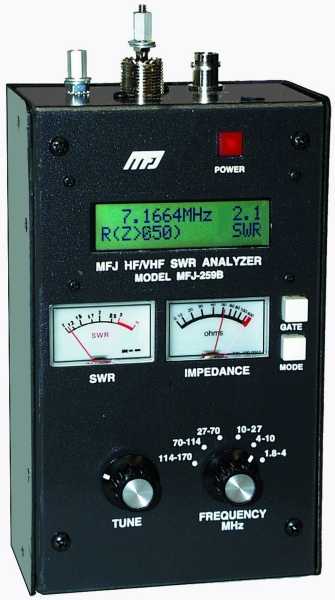 MFJ has been supplying inexpensive antenna analyzers to the amateur radio marketplace for many years. In fact, their MFJ-259B ($250USD street price) has become as ubiquitous as the directional wattmeter. Using one will give you the complex impedance of any antenna (X and R) up to 650Ω or so. It also reads out the SWR, but all too often that reading is incorrectly used, especially when adjusting shunt matching coils. It does have one drawback, however, as it does not display the actual Z (±j). As a result, you have to figure that out yourself, albeit rather self evident.
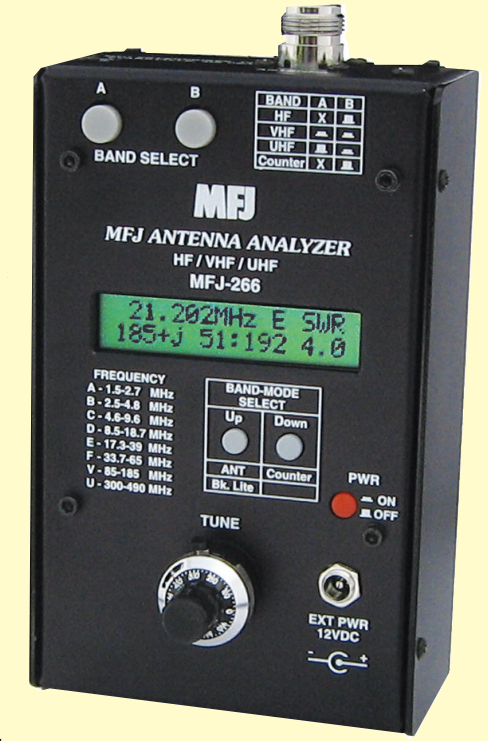 All of these shortcomings have been addressed with the introduction of the MFJ-266, with its street price hovering around $330USD. The MFJ-266 displays all three parameters simultaneously (except for UHF). In some respects it is easier to use than the 259B, while in others somewhat more complicated. Further, it doesn't have a provision for using rechargeable batteries like the 259B, as the total voltage would be to low for the unit. You'll also need a N to UHF adapter for most measurements.
It has one very unique feature (besides its no-nonsense warranty), and that's a built-in interference detector. For example, if you have a local RF source like an FM broadcast station, the MFJ-266 will indicate that fact, as well as its frequency! I don't know of any other antenna analyzer that can do that. If you do have interference, you might want to purchase their MFJ-731 tunable filter.
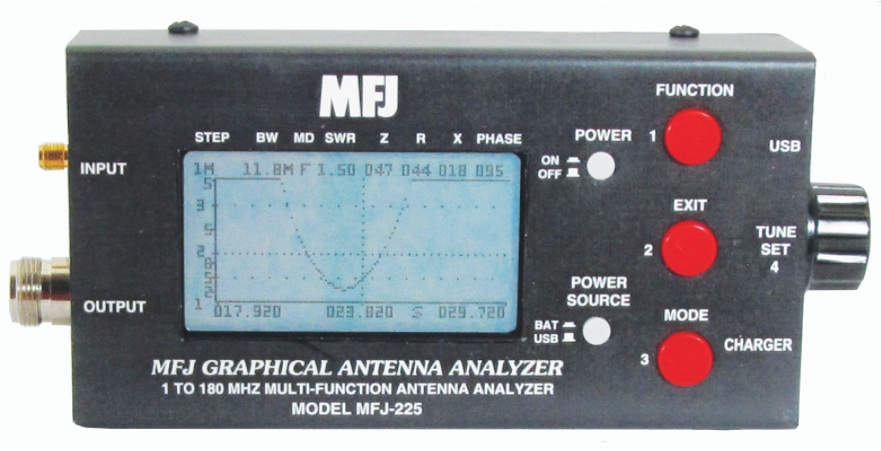 Their new MFJ-225 Graphing Antenna Analyzer is shown at right. At ≈$400 retail, it is a bit pricey for some folks. However, the data it gathers is easier to interpret, and the fact that it is a two port device increases its value for a variety of reasons. Be prepared to order a few adapters, as the output port is an N connector, and the input port is an SMA type.
It would take several pages to describe all of the uses for the MFJ-266 (or the 259B for that matter), but a quick visit to MFJ's web site will fill you in. You can even download a copy of the owners manual. From tuning matching coils, to finding resonant points, an antenna analyzer is an invaluable tool which should be in every ham shack, right next to the wattmeter and dummy load.
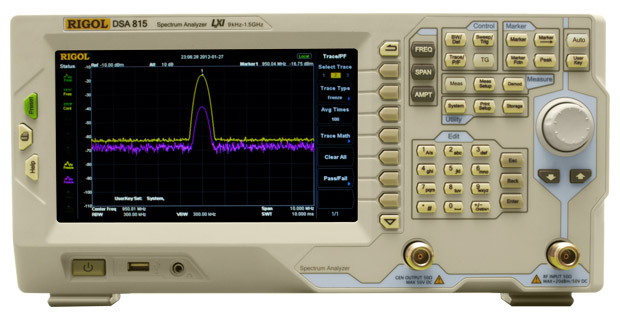 Not many amateurs really need a spectrum analyzer. Those who do typically own surplus HP® or Tektronix® units originally costing thousands of dollars. However, Rigol, a Beijing, China-based company with US offices, has invaded our shores with low-cost units rivaling the finest from both HP® or Tektronix®. The DBA815 is their low-cost, entry-level unit selling for about $1,300 plus shipping. The link and the associated videos and PDFs will explain what all the DBA815 will do. The question remains, is it an extravagant purchase? If you watch the video, you'll know if it is the right instrument for your shack.
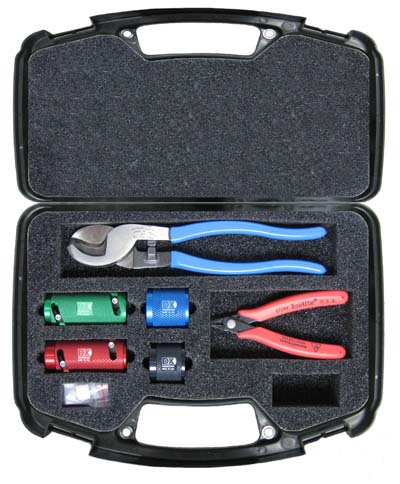 One of the very best coax prep tools is Ripley Tools, UT series. They're available DX Engineering, and their complete kit covers RG8, RG58, and RG8X sized cables. They've packaged it in a plastic storage box, along with a proper coax cutter! The complete kit (DXE-UT-KIT2-D) retails for $190, plus shipping.
If you have your soldering iron hot, you can cut, prep, and solder on a PL259 in less than 2 minutes! I have a complete story about this tool in my Coax article.
There are other coax cutters on the market, but they all require you to properly place the prep tool at a specific length from the end of the coax. With the DXE cutters, that step isn't necessary as all of the measuring is done for you. I'll never be without one, and neither should you.
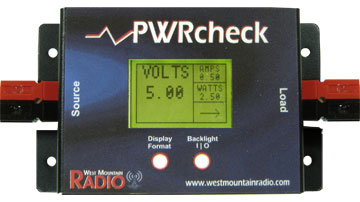 West Mountain Radio keeps coming out with new devices for those folks who power their radios directly from a nominal 12 volt supply; mobile in other words, especially stationary mobile. The PWRcheck® properly assesses, and monitors your backup battery load. It can handle up to 40 amp of load, and has 13 display modes including voltage, current, wattage, and amp-hours, replete with programmable alarms! And of course, it uses 40A Powerpole® connectors for both source and load. It has a backlit LCD, stores up to 174,000 sample points for data logging (that's over 4 months worth), and includes PC software for real-time monitoring, data download, and charting. If you're into fixed, and/or portable operation, it is just the ticket!
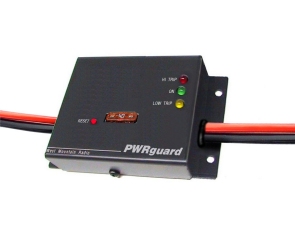 The device shown at right is their new PWRguard®. It contains a 40 amp, high-power FET switch (no relays here!) which control circuitry activate. If the input voltage drops below 11.5 VDC, or goes above 15 VDC, the PWRguard® shuts off the output power. Although aimed at the battery powered crowd, it does in fact have applications in the portable, and mobile market places.
Both devices are available from PowerWerx, and other fine amateur radio dealers.
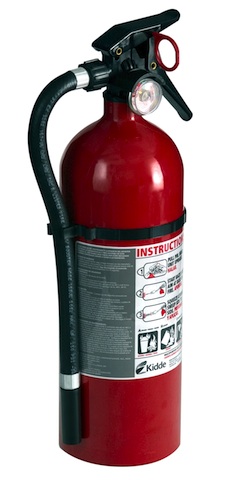 One item every mobile operator should have on-board is a fire extinguisher. The Kidde one shown at right, is one of the many dry-type fire extinguishers Kidde offers for home, garage, and automobiles. However, it should be noted that fire extinguishers come in many styles, sizes, and even the type of fire they should be used on. In the case of mobile use, it should be a universal one, like the 21005765 one shown. It is rated as a 3-A:40-B-C. if you visit this link on their site, there are data sheets on the various types, and sizes. The best part is, they're affordable, besides being easy to use.
Just for the record, Class A extinguishers are used for combustible materials such as paper, wood, and most plastics. Class B extinguishers are for flammable or combustible liquids such as gasoline, and oil. Class C extinguishers are for electrical fires.
If you want to learn more about fire extinguishers in general, here a good site to visit.
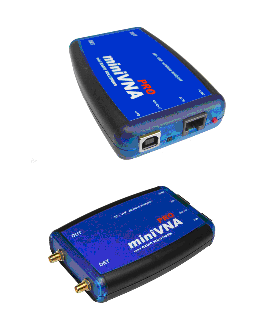 Affordable antenna analyzers have been with us for some time. They're invaluable for finding resonance, and the impedance (X and R), if they're within the analyzer's range (typically <650 ohms). What they can't do is give you a picture (a graph really) of the reactance over a given frequency span. This is the forte of a VNA (Vector Network Analyzer).
There are several versions of miniaturized VNAs on the market these days, and choosing one might seems daunting. However, there is one feature which sets the miniVNAPro apart from its lessor competition; it has Bluetooth® connectivity! Heretofore, either the data was stored in the VNA, or a CAT5 interconnecting cable was required. But with Bluetooth®, the VNA can transfer live data to its host computer. The implications should be obvious.
Its frequency range is from .1, to 200 MHz, with a range of Z from 1 to 1,000 ohms. Its built in Li-ion battery is recharged through its USB connections, and offers 4 full hours of continuous testing. Since it has two ports, you can even use it to do IMD testing!
Software versions cover not only Windows, but MacOS and Linux. The data can be exported in several formats, including jpg, PDF, and Excel. At $650 including the SMA adapter kit, it is a bargain its competitors can't match.
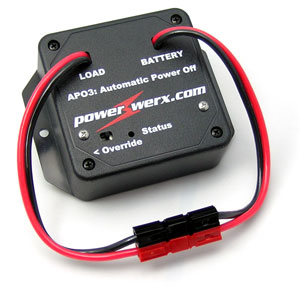 Unfortunately, not all amateur radios have an auto off feature, especially VHF/UHF ones. This fact causes a lot of amateurs to bypass proper wiring practices (using vehicle wiring for example) just so the radio can't be left on. Well, now there is a solution.
The PowerWerx APO3 is more than just a timed (0, 5, 10, 20 minutes), auto off device. There are four pre-programmed voltages (11.8, 12.1, 12.7, 13.05 volts) settings. Properly programmed, the APO3 will turn off, , your radio (or your ancillary equipment) just by monitoring the battery voltage!
It can handle up to 30 amps making it compatible with almost any radio. It comes equipped with Anderson Powerpole connectors, making wiring simple, and quick! At $60 (MSRP) it is also affordable. Visit their web site for more information.
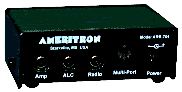 Amplifier interfaces are a prerequisite for high power mobile operation as none of the late model miniaturized transceivers will directly switch one. The MFJ 704 shown is one of many sold to the amateur market, and it will switch just about any amplifier including grid blocked ones. This is overkill in a mobile installation.
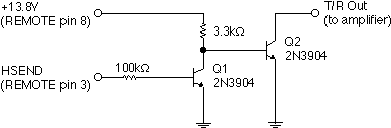 The fact is, a very simple circuit can be built in less than an hour that will easily switch any solid state mobile amplifier I am aware of. The plans are on Bob Wolbert's (K6XX) web site. As you can see from the schematic, it requires just two resistors and two transistors. I built one of these onto the accessory jack plug that came with my 706; it is that small and that easy. While I on this subject, here's a tip. The accessory plug which comes with both the Icom 706 and 7000, comes with a pigtail which makes wiring difficult especially if you only need to bring out two or three of the 13 pins. The accessory jack Kenwood supplies for the TS-2000 is identical, and it comes unadorned. Most amateur dealers carry the Kenwood part which sells for about $7.
By the way, the SGC SG500 is the only mobile amp which can be safely switched by the Icom IC-706 and IC-7000, and the Yaesu FT-857 mobile transceivers without the need for an interface. All others require one.
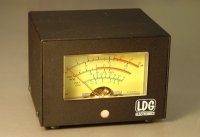
If you use a Yaesu FT-857 mobile (it'll work with a FT-897 too), you know how hard the LCD S meter is to read. The folks at LDG Electronics have come up with an answer. At just $50 retail, it is an elegant solution to the problem. On receive it becomes an S-Meter, discriminator indicator, or voltage monitor. On transmit, it measures RF Power, SWR, modulation, ALC or voltage. The only drawbacks are finding room for the meter, and home brewing a mobile bracket. Incidentally, the programming required to get the meter to indicate all of the functions can be frustrating. Do yourself a favor, and follow the installation directions carefully.
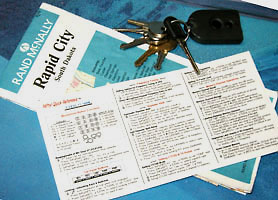
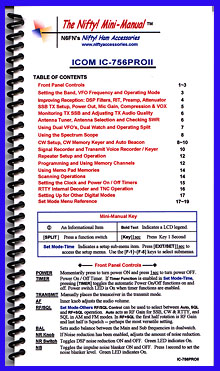 Anyone who owns a menu-driven, miniaturized mobile radio, knows how difficult some of them are to program. Adding insult, far too many are written in ambiguous English. Here's the best answer I've found.
Nifty Accessories offers a line of Mini-Manuals and Mobile Cards for all of the popular mobile radios, and most handheld as well. They have all of the important programming information clearly defined, easy to read, and in plain English!
They won't break your budget either, as prices range from $5 to about $25. These photos don't do them justice, so you should visit their web site for full details. While you're there, look at their other nifty stuff.
 Rescue Tape is a self-fusing silicone tape. It comes is a rainbow of colors, but that's not what makes is special. It is incredibly strong, it will adhere to any surface, thus effectively sealing out moisture, and dirt. It is an ideal produce for sealing all manner of connections exposed to the elements, especially in a mobile installation. It is perfect for sealing coax connections too, and when properly applied, it makes them virtually submergible. You can even use it to seal high voltage connections like those used in auto-coupler applications. It has a myriad of other uses too.
It makes a great emergency bandage, and you can even use it to repair a radiator hose leak. The best part is, when you need to remove it, it leaves no residue, period! Your local Ace Hardware is one source, but it can be ordered on-line directly from Rescue Tape.
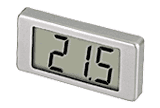 Some things just aren't small enough to fit where you want them to fit. This goes double for voltmeters which seemingly are large, and usually ugly. Here's two that aren't.
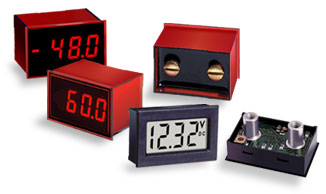 Martel Electronic's meter division makes the QV100 series of 2 wire voltmeters at left. They're not only small physically (.84 x 1.71 inches), at about $50 each, they're also small in cost. Current draw is just 3 ma, and really don't need to be switched. They're unlit which might be a drawback for some users. I solved the problem with a shielded LED. In a mobile application, the meter should be shunted with a Zener diode (18-24 volts) to protect the meter from transients. Check out their web site for other versions of the meter including time-elapse, temperature, and analog readout styles.
The LED voltmeters shown at left are from Datel. They are available in both red and blue LEDs. They sell for about $60 plus shipping. The good part is, they're weatherproof! Like the Martel they are two wire which simplifies wiring. They also sell back-lit LCD voltmeters, but they're not weatherproof. Datel also sells AC meters, as well as ammeters. Downloadable data sheets are on their web site.
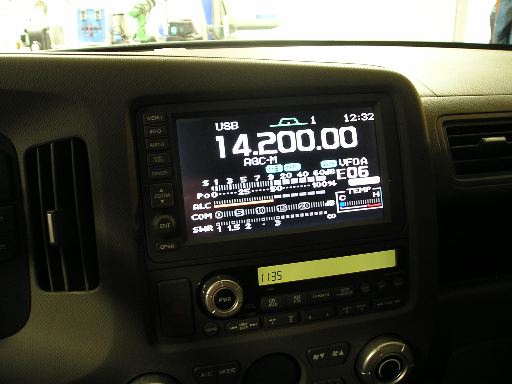 If you have an Icom IC-7000 and a factory installed navigation system, here's just the gadget you need. TVandNav2Go makes video adapters for just about every factory installed navigation system ever made. The best part about the unit is, it reduces the distraction we all contend with. The left photo depicts the unit in my Honda Ridgeline.
The TVandNav2Go is in a metal box about 1 x 3 x 4 inches. The manual is rather lame, but installation is easy enough to figure out. You have to supply switchable DC power to the unit, and a SPST switch or two for controlling it, and select the display sync mode. There's even a second, switchable input for a backup camera, or DVD player. But, before you decide on the latter, remember there are laws about watching video while in motion.
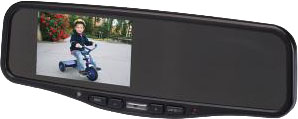 If you don't have a navi, then consider an AudioVox monitor mirror is an option. In this case, you won't need the video adapter, but you will still need to provide power to the mirror. That's easy in vehicles with a compass built into the mirror, but yours may be a bit more difficult.
While I'm on the subject, I have been asked several times if anyone makes a heads up video adapter. Fortunately, there isn't one! Heads up displays were all the rage at GM a few years ago, and they're is still an option on a couple of models. But the truth is, they're distracting to most drivers, especially those who wear bifocals. Due mainly because they're always in your field of vision. Even when turned off, the reflective material plated on the glass is evident, and forget about using one in the daylight! I just wonder how many Cadillac drivers use their FLIR system without getting distracted?